
AI at South Dakota’s Public Universities
Learn. Explore. Apply.
Artificial intelligence is changing how we learn, work, create, communicate, and solve problems. South Dakota’s public universities are preparing students, faculty, and staff to use AI effectively, responsibly, and with confidence.
This important work will be guided by five key focus areas.
Responsible AI | Needs related to governance, policies, security, responsible use, and infrastructure.
AI in Education | Equipping students and faculty to utilize AI effectively across curriculum and programs.
AI in Our Work | Exploring responsible agentic AI applications that improve university operations and services.
AI in Research | Supporting research, discovery, collaboration, and innovation.
AI Literacy | Building the skills students, faculty, and staff need to navigate an AI-enabled world.

AI Advisory and Governance Model
SDBOR has established a systemwide AI Advisory Committee with representatives from the System Office and each university. The committee coordinates and governs systemwide AI initiatives, while focused workgroups led by committee members provide additional support. This structure makes it easy to incorporate perspectives from every university and department.
AI Advisory and Governance Committee
- Chris Kolsrud, SDBOR | AI initiative lead, committee coordination, platform and program direction
- Maegan Detlefs, BHSU | Communications, training, adoption, and change management
- Mark Spanier, DSU | Emerging technologies, academic innovation, and workforce readiness
- Eric Kline, NSU | Student success, enrollment, and institutional operations
- Victor Taylor, SDSU | Academic innovation, graduate education, extended studies, and AI innovation
- Lance Peterson, USD | Security, risk, governance, privacy, and data governance coordination
- Ken Benjamin, SDM | Research innovation and collaboration
- Liza Clark, SDBOR | Board and executive leadership direction
- Becky Degen, SDSU | Administrative services and operational improvement
Supporting Workgroups
Artificial intelligence is transforming every sector of our economy, and higher education must evolve just as rapidly.
BOR President Jeff Partridge
Objectives and Timeline
Featured Article

BOR Seeks to Advance Technology Investments
The South Dakota Board of Regents (BOR) is seeking funding for technology infrastructure and artificial intelligence in its FY28 budget requests as discussed during the July BOR Meeting. This request aims to enhance AI education across the state, improve cybersecurity, and update digital systems that serve over 35,000 students at South Dakota’s public universities.
The proposals include ongoing investments to maintain and replace critical systems and a one-time investment to launch the Future Ready Technology Initiative, a multi-year effort to modernize technology supporting learning, research, and operations across South Dakota’s public university system.
“Technology is no longer simply a support function for higher education; it is the foundation for teaching, research, and developing successful career-ready students,” said Dakota State University President John Ballard. “These investments will ensure our universities will continue to have the secure, modern infrastructure needed to responsibly integrate artificial intelligence, strengthen cybersecurity, and prepare graduates with the skills employers are demanding.”
The Board’s FY28 base budget request includes $4.5 million in ongoing funds for essential technology maintenance and repair. When combined with annual investments from the system’s dedicated technology tuition adjustment, these ongoing funds create a sustainable funding model. This approach enables the university system to regularly update aging technology, lower cybersecurity risks, modernize enterprise software, and avoid the expensive cycle of waiting for critical systems to fail before replacing them.
In addition, the Board is requesting a $20 million one-time investment to launch the Future Ready Technology Initiative. The initiative will modernize the digital backbone of the university system and create the infrastructure necessary to support artificial intelligence in classrooms, research laboratories, administrative operations, and student services.
AI Academic Programs
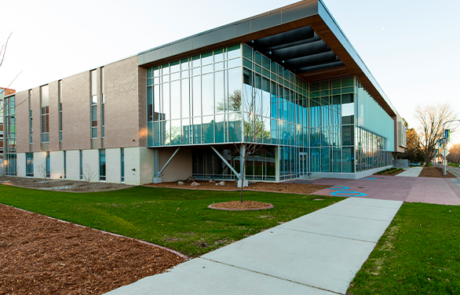
As reliance on technology grows, so does the need for skilled AI professionals. Dakota State University (DSU) created a Master of Science in Artificial Intelligence (MSAI) program to prepare students for this evolving field.
AI Academic Programs
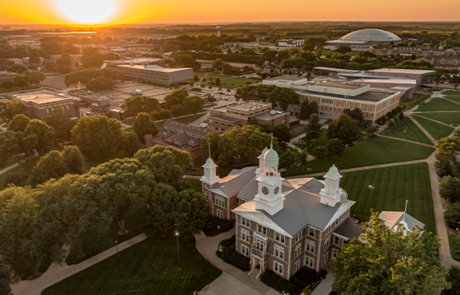
The Master of Science in Artificial Intelligence (MSAI) at the University of South Dakota is a cutting-edge graduate program designed to address the rapid advancements and growing needs in the AI sector. The MSAI will encourage innovation through research initiatives and interdisciplinary collaboration, advancing the state’s science and technology foundation.

AI Academic Programs
The new stackable bachelor’s, master’s, and doctoral degrees in Artificial Intelligence Engineering at South Dakota State University (SDSU) will provide students with an interdisciplinary foundation in artificial intelligence, combining computer science, engineering, mathematics, machine learning, and responsible AI practices.
AI Academic Programs
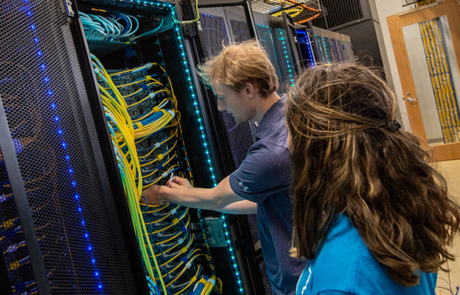
The doctoral degree in Artificial Intelligence at Dakota State University prepares students for advanced research in AI and computer science through faculty-led projects, interdisciplinary collaboration, and industry partnerships. Students will develop next-generation AI technologies.